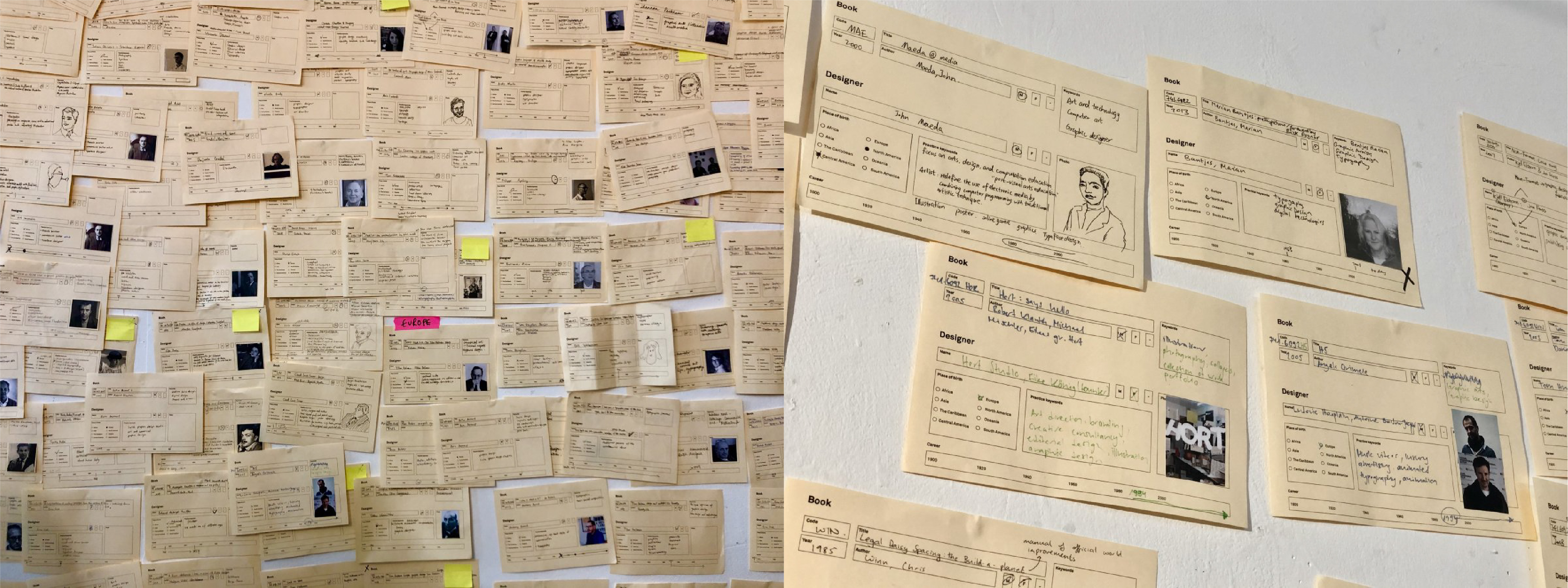
741.6092 began with a simple shift in perspective: treating a library collection not only as a source of information, but as a dataset. Working as a group, we documented graphic designers represented in the library and recorded information including time period, geography, gender and areas of practice. By arranging and comparing these profiles, we looked for patterns in who appeared in the collection, whose work was most visible, and whose histories were less represented.
The project brief asked us to question how collections construct particular ways of seeing and knowing, and to identify a compelling narrative within the data for an end-of-term exhibition.
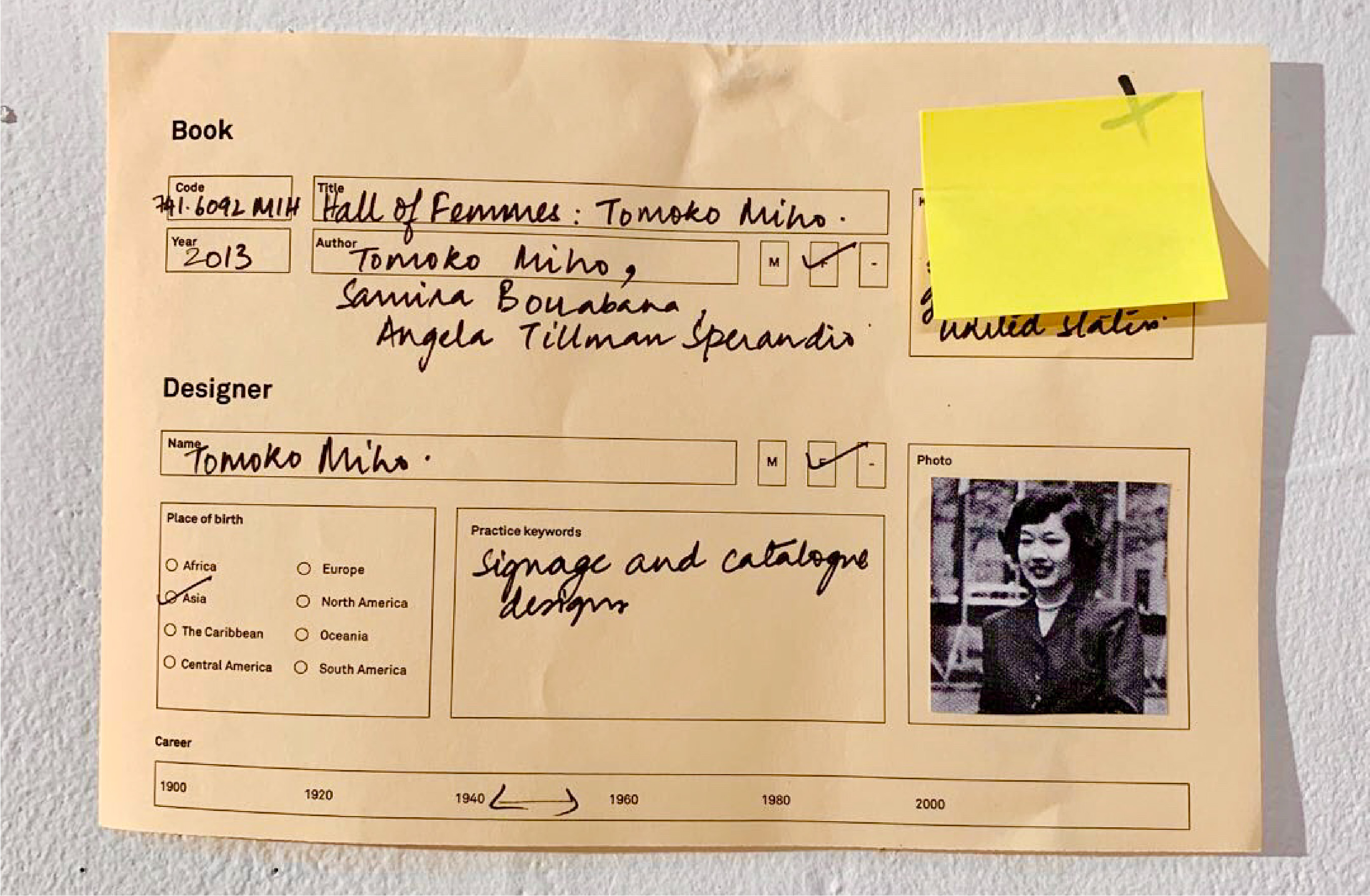
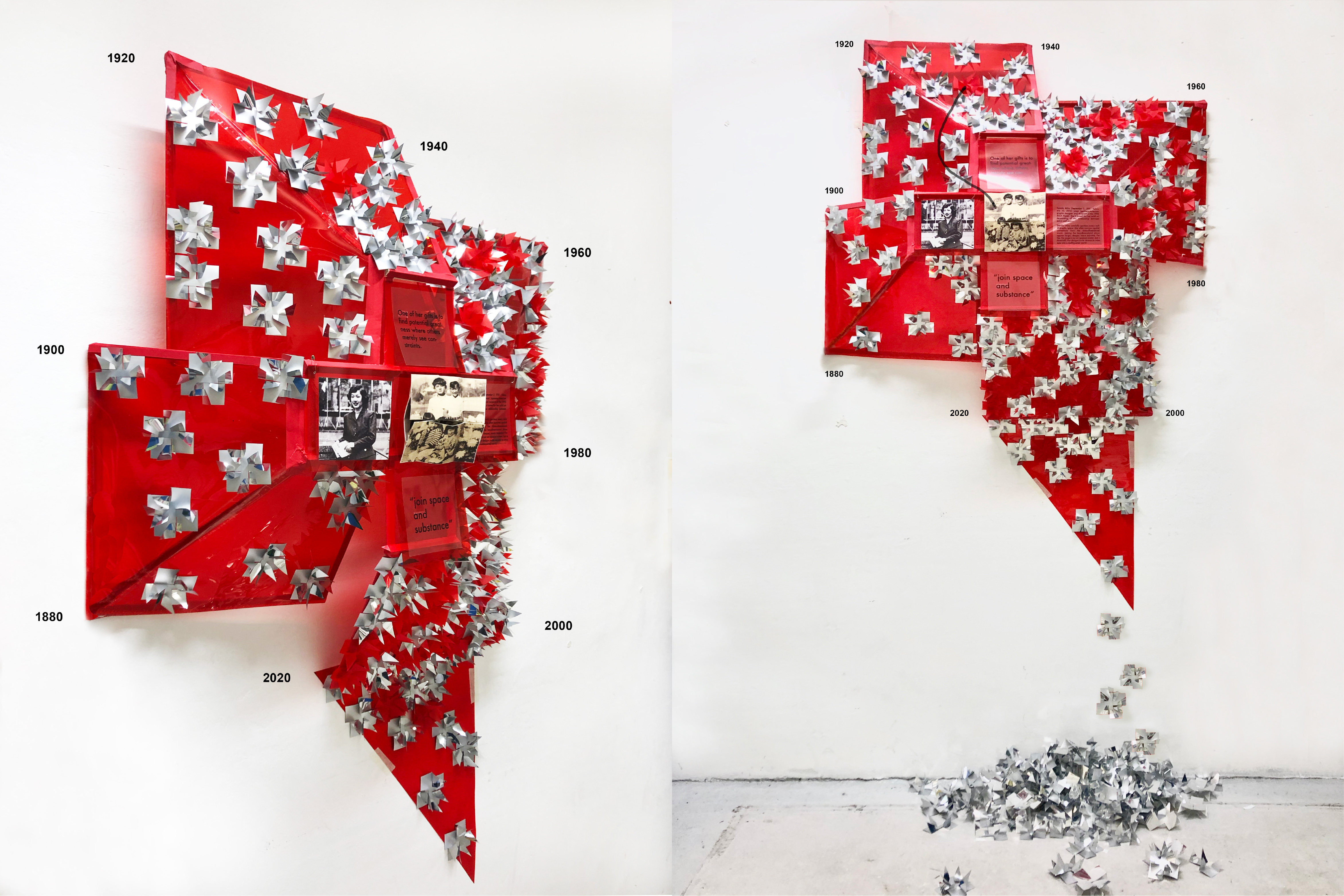
Through this mapping process, we identified Tomoko Miho, a Japanese-American graphic designer whose position within the dataset stood out. Our analysis suggested that she was the only woman in our sample who remained professionally active across the Second World War period. Rather than treating this simply as a statistical anomaly, we used it as a point of entry into her practice and began studying the visual structures, spatial relationships and material qualities of her work.
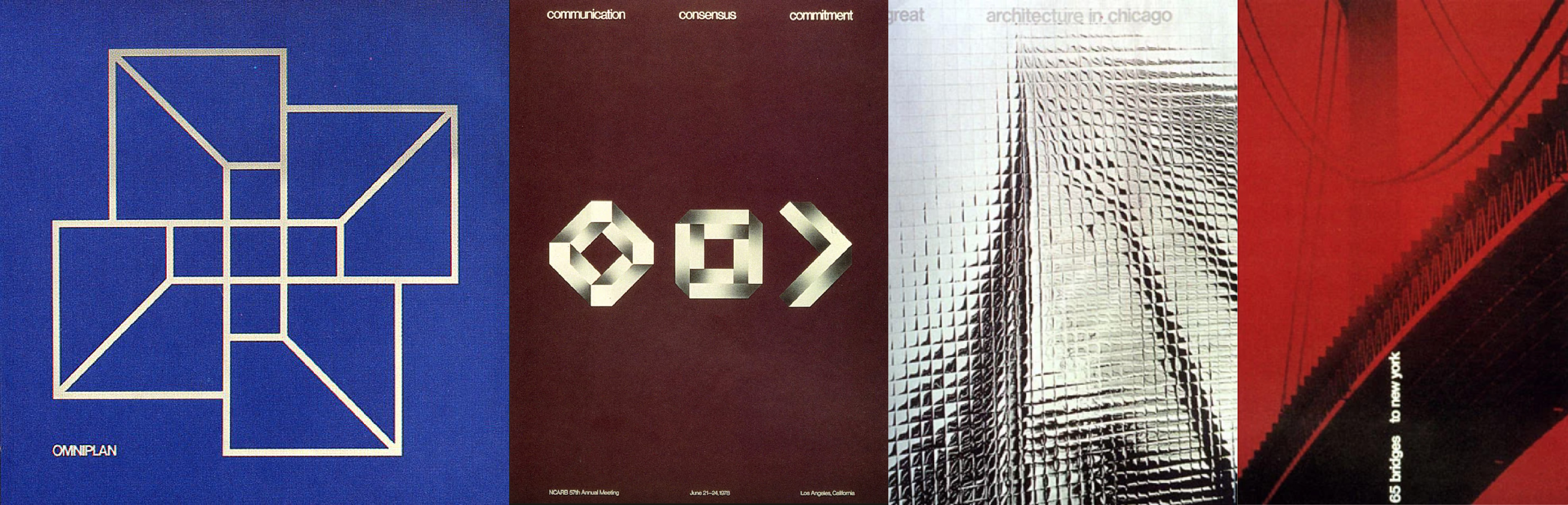
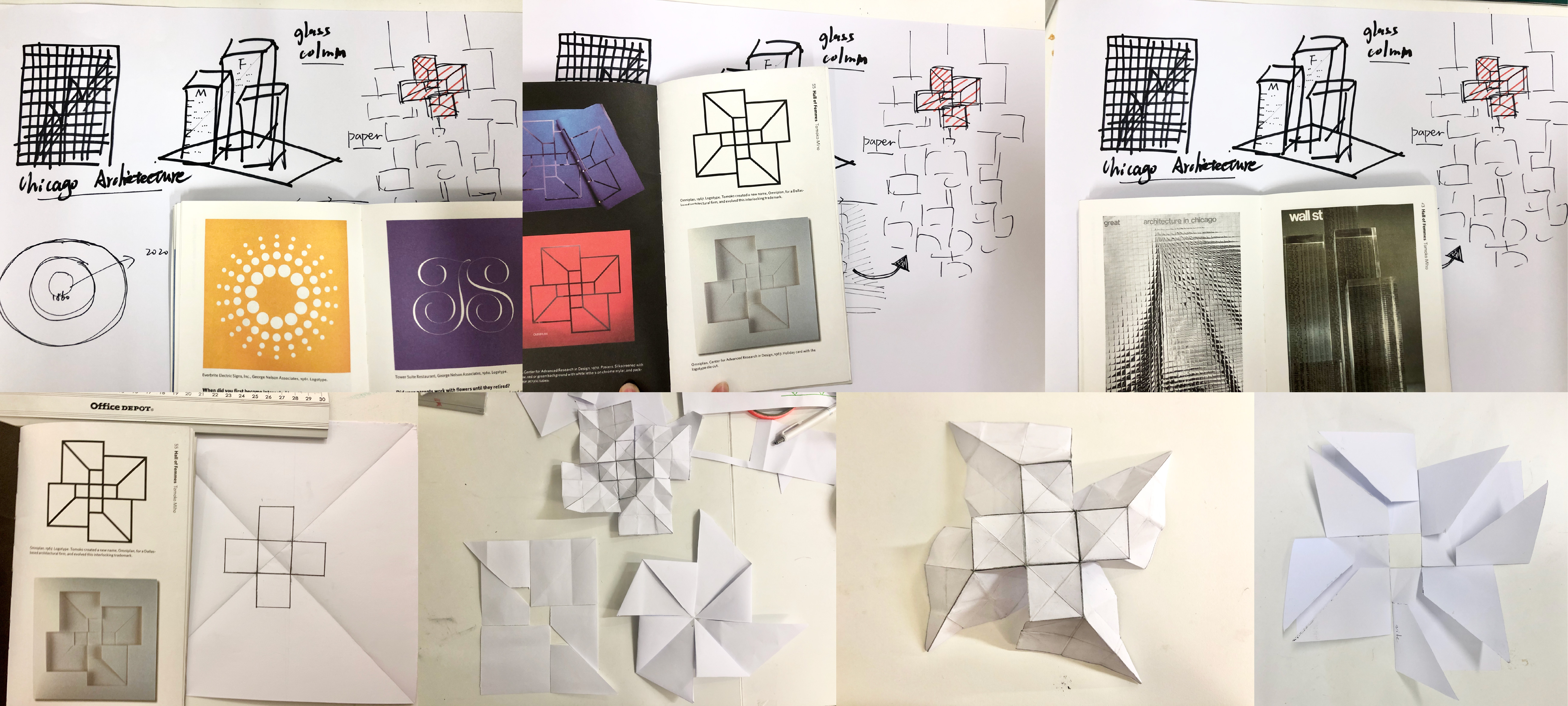
A recurring quality in Miho’s work was her ability to construct a sense of depth and architectural space through flat graphic forms. Grids, intersecting planes and geometric structures often appeared to move between two and three dimensions. We became interested in how this visual language could be translated physically rather than simply reproduced graphically.
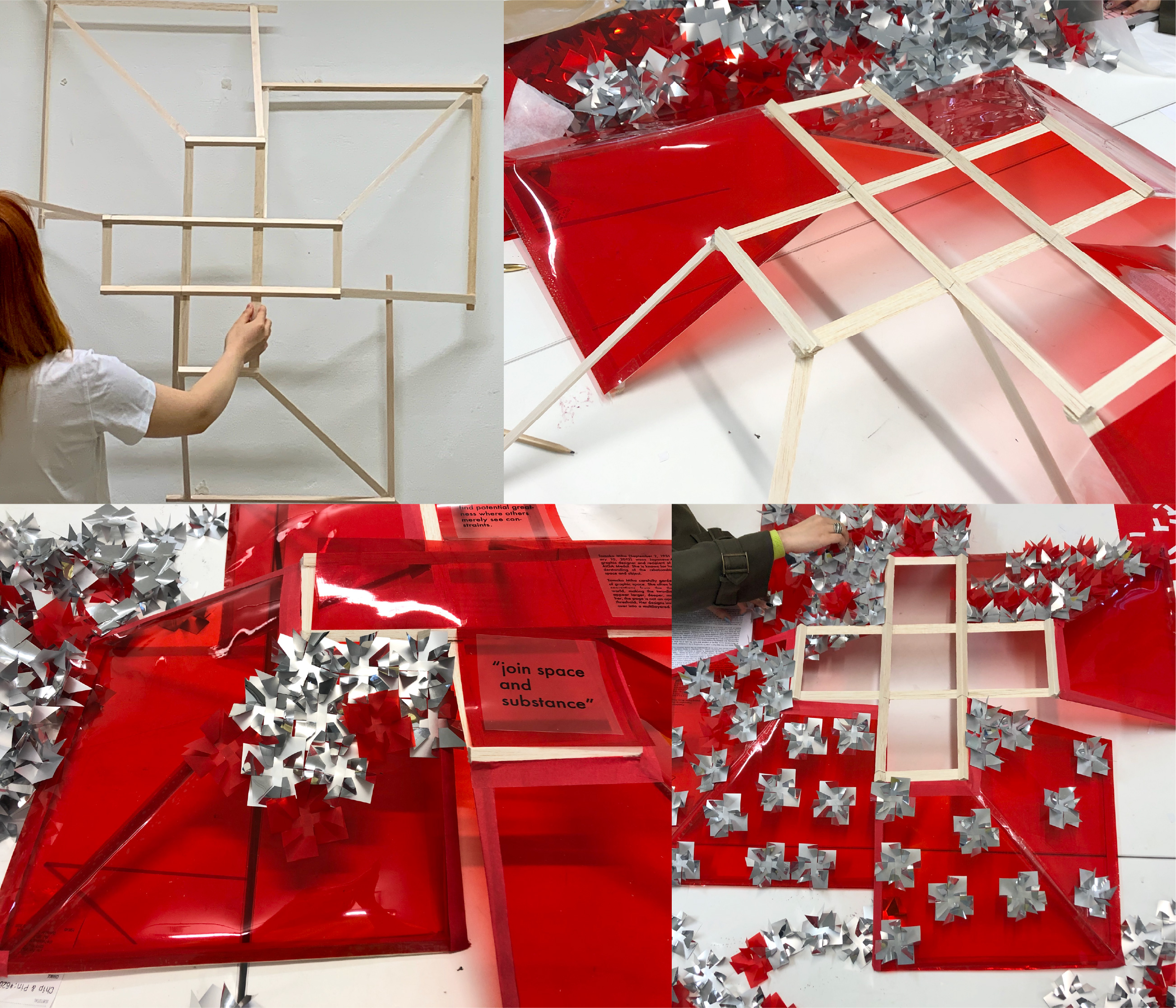
Origami became the bridge between these two conditions. A flat sheet of paper could carry information as a two-dimensional surface, while folding could transform the same surface into volume, depth and structure. We developed a modular folded form derived from our analysis of Miho’s compositions and used it as a unit for representing the dataset.
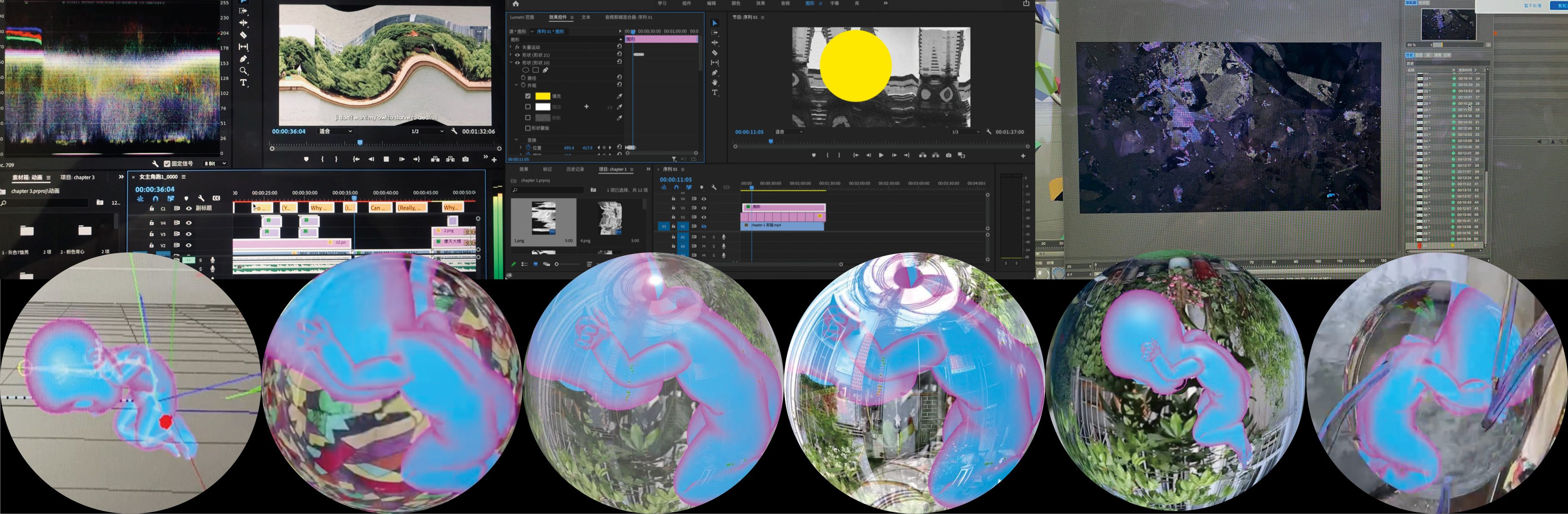
Moving image developed across Grow, Love and View.
The project then moved from screen-based storytelling into physical performance. Projection, scenography and improvised movement brought human performers and virtual characters into the same space. Without real-time motion capture, their apparent interaction was created through repeated adjustment of projection scale, timing and choreography, allowing physical and virtual bodies to meet, dance, embrace, argue and separate.
Audience participation extended this relationship further. Visitors received folded invitations containing hidden identities and movement instructions. Some remained observers, while others became Infin and entered the performance. By following and imitating one another’s movements, participants repeatedly shifted between giving a command and responding to one. The work therefore moved from representing separation to letting people experience dependency, imitation and change through their own bodies.
The final installation brought moving image, graphic design, performance and audience participation into a single spatial experience. For me, the project marked a shift from treating graphic design as a primarily static medium towards understanding it as something that can unfold through bodies, space, time and participation. It also became an early exploration of a question that continues to shape my work: how designed systems can structure interaction without fully determining what people think, feel or do.
 Marci Chi Ma