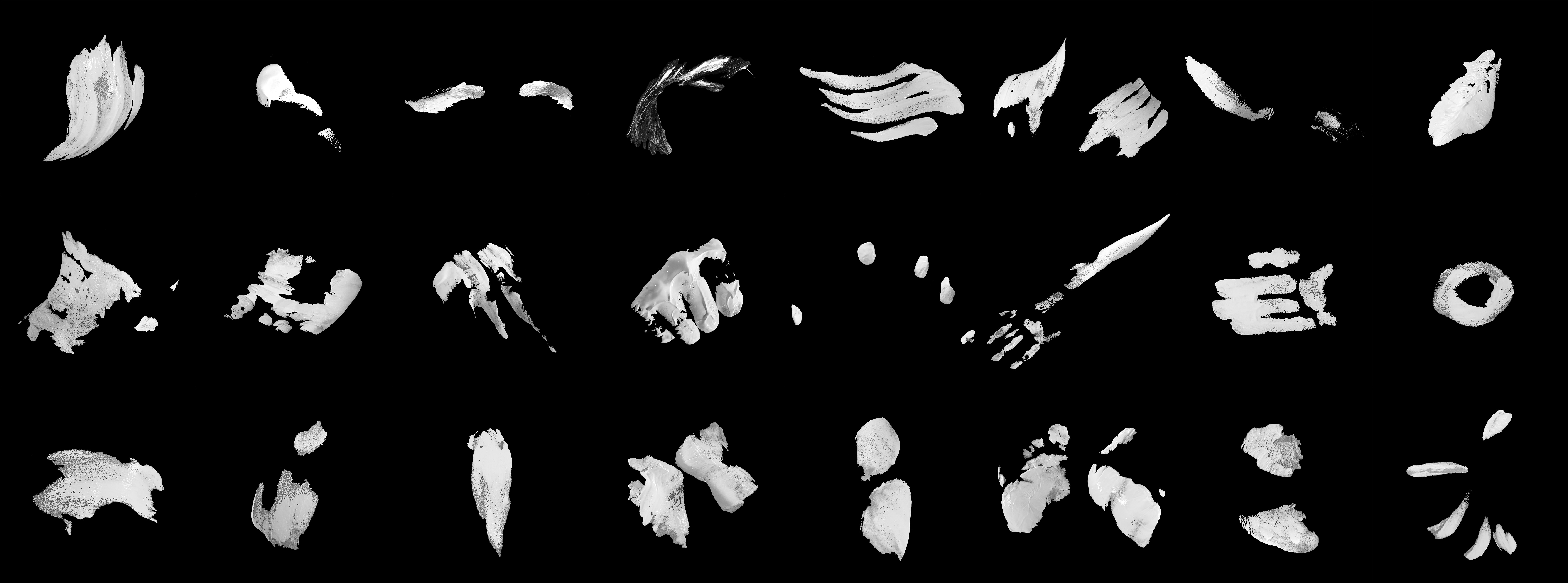
The Intimacy explores how physical closeness can be translated into a visual language. The project began from a broader reflection on how young adults can become disconnected from intimacy through study, work, digital communication and increasingly fragmented daily routines. Rather than representing intimacy through existing icons or illustrations, I wanted to create a system whose forms emerged directly from physical contact itself.
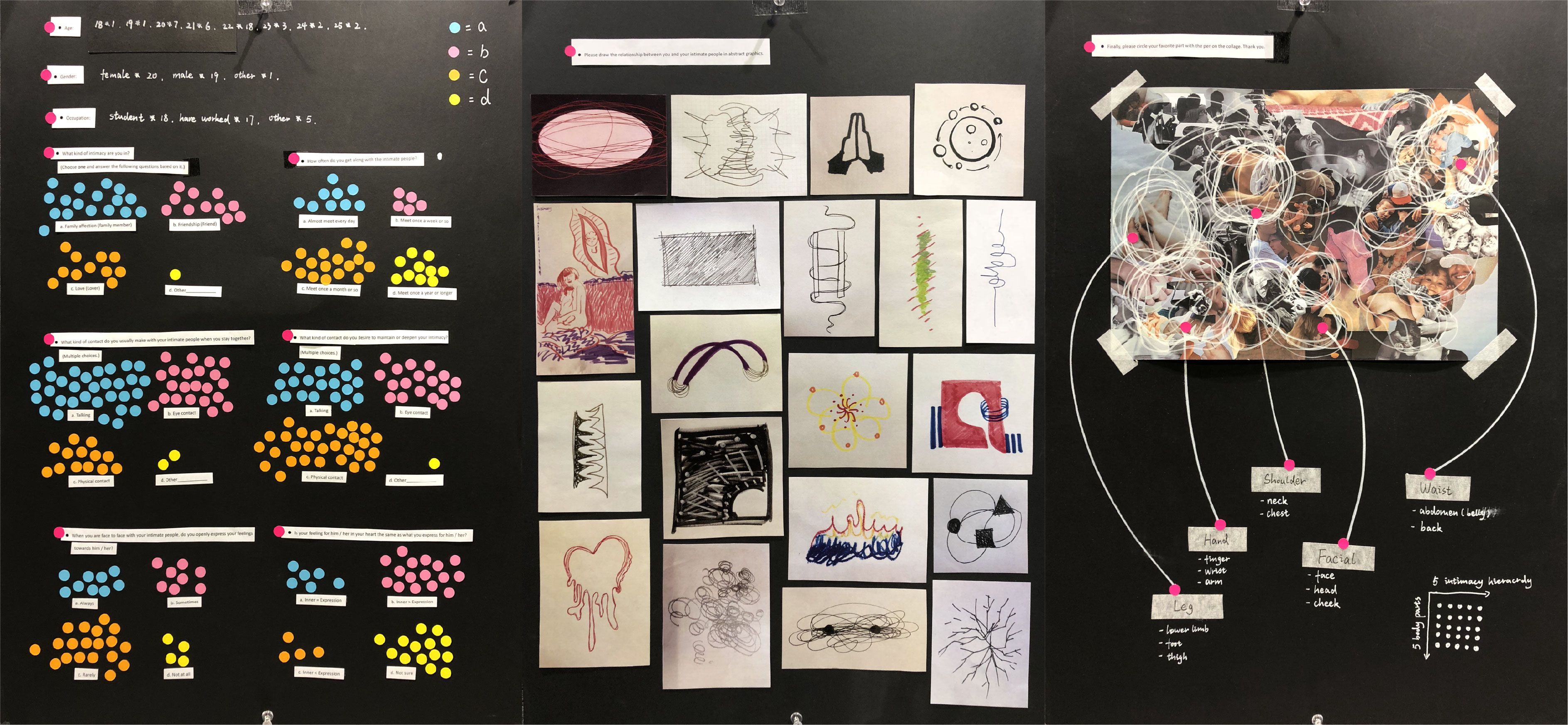
Through early questionnaires, drawing exercises and visual mapping, I examined how people understood intimacy, which forms of physical contact they associated with closeness, and how those relationships might be organised visually. This led to a simple framework based on five areas of the body and five levels of intimacy, creating a matrix of 25 possible interactions. The five areas were the face, shoulders, hands, waist and legs.
I then shifted from analysing intimacy to physically producing it. White paint became the medium between two bodies: when skin touched, pressed or moved against another surface, a trace was transferred and left behind. Each mark was therefore not designed in advance. Its shape was produced by the body part, the gesture, pressure and duration of a particular interaction.
I chose to carry out the interactions with my mother, whom I considered the closest person in my life. This made the process more than a formal experiment. The acts of touching, holding and leaving traces became a way to examine our own relationship and, for me, to reflect on distance and reconciliation within that relationship.
The traces produced through these interactions were documented, isolated and organised into a set of 25 symbols. Their irregular edges, changes in density and different gestures retain evidence of the contact that created them: a stroke produces a different form from a press, a hand leaves a different structure from a shoulder or leg. The resulting language sits between abstraction and bodily evidence. A viewer may not immediately know what action created each form, but the marks still carry the material residue of an encounter.
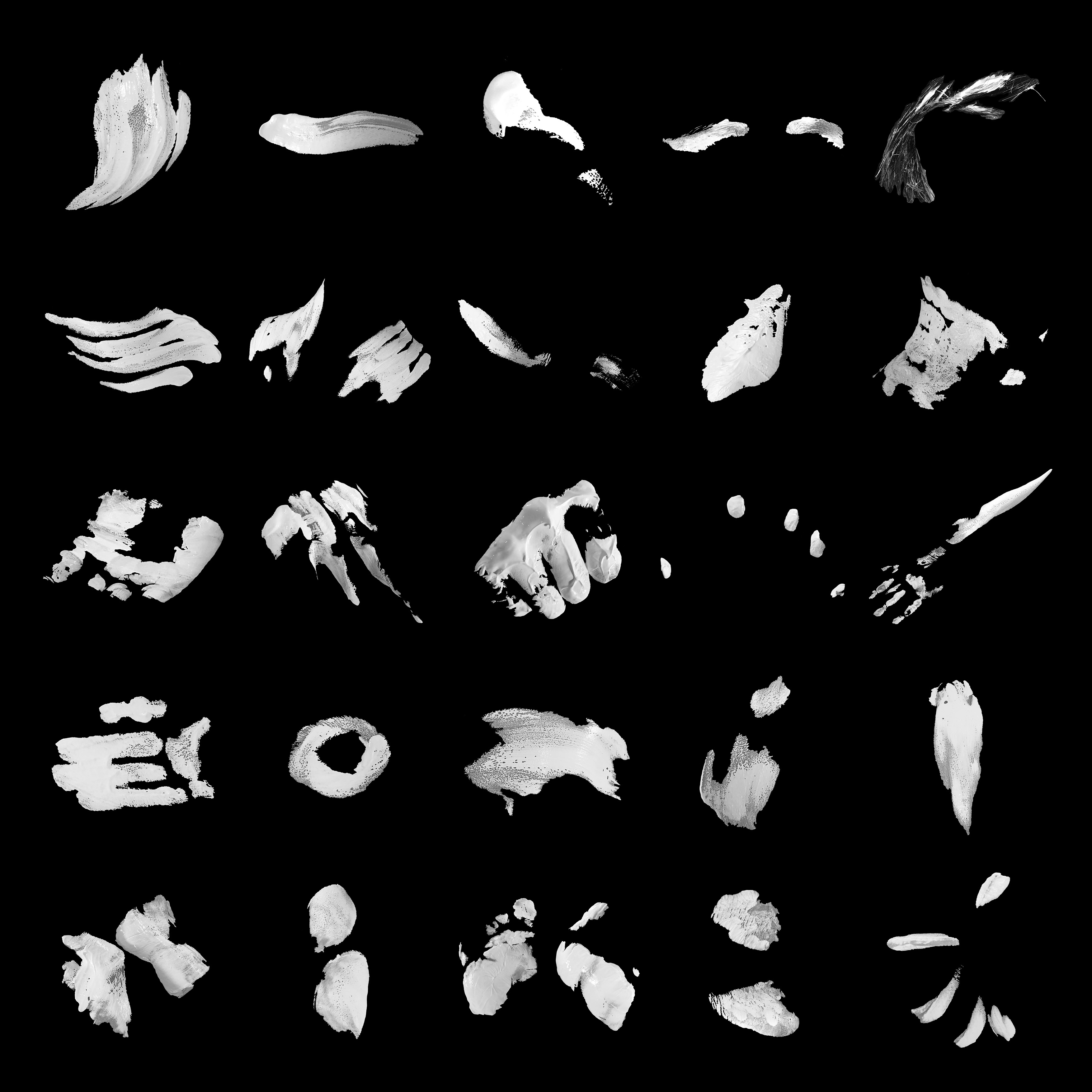
This ambiguity became central to the project. Rather than assigning each symbol a fixed universal meaning, I wanted the traces to prompt questions: What kind of touch might have produced this mark? Which relationships allow this kind of contact? How does physical closeness change between people, and where do we place our own boundaries? The symbols therefore operate less like conventional pictograms and more like visual prompts for interpreting intimacy through personal experience.
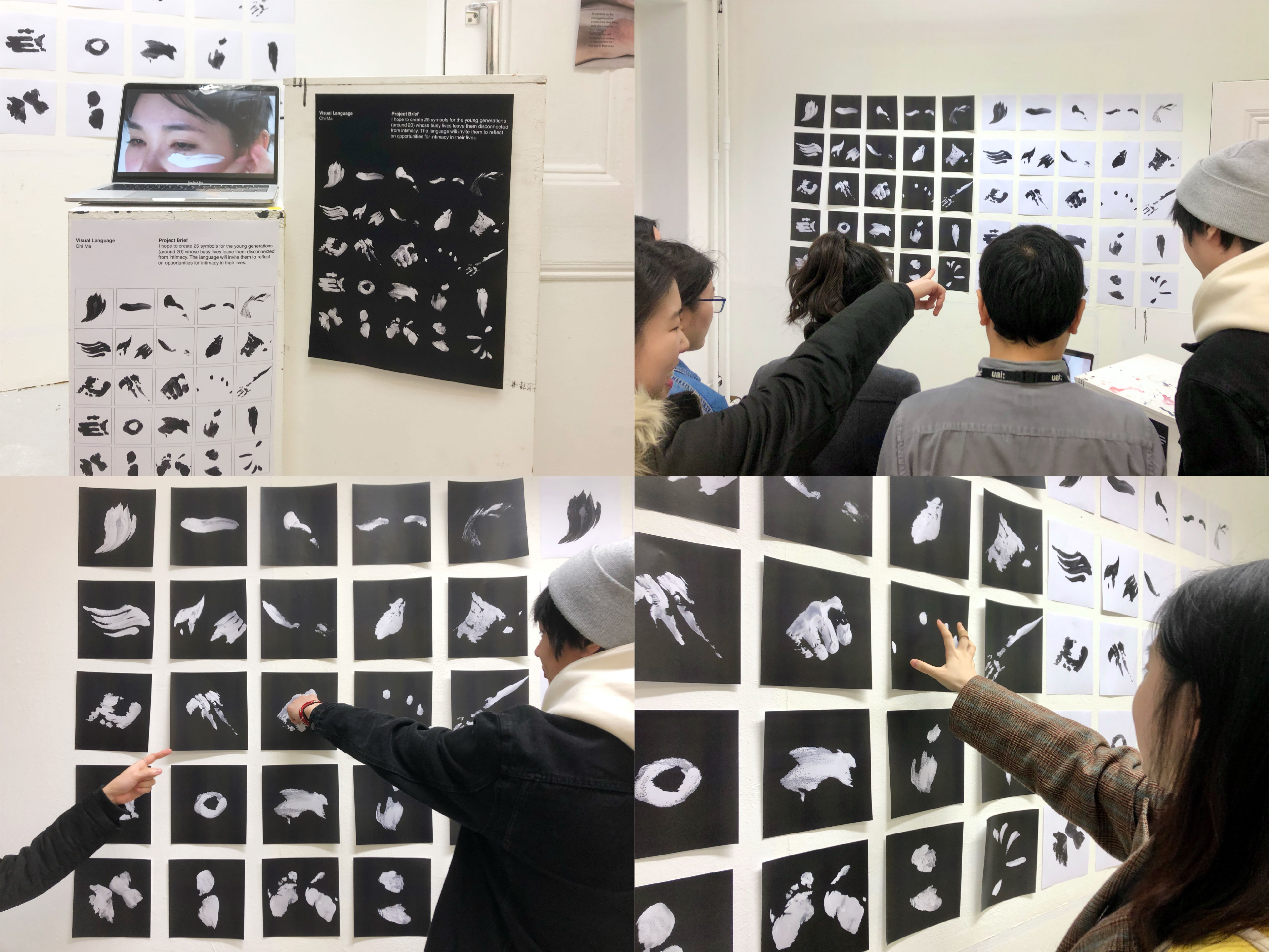
The final installation presented the symbols together with documentation of their making process. By separating the marks from the bodies that created them, the project turned a private interaction into a shared visual language while retaining some of its ambiguity. The work became an experiment in how graphic design can emerge from embodied interaction, using physical contact itself as both the subject and the method of image-making.
 Marci Chi Ma