
RESEARCH PROJECT
MoodCurator: Implicit Affective Steering for Generative Curatorial Storytelling
DIS 2026 · Paper ↗ · Demo ↗ · Presentation ↗
MoodCurator is a web-based design probe that explores how people can steer AI-generated art interpretation without relying on complex text prompts. It was designed for online cultural heritage settings, where audiences may have a clear sense of mood or aesthetic direction but lack the specialist vocabulary or prompting skills needed to express it.
The project introduces a three-channel steering approach. Audiences select a colour palette as an affective cue, curate three artworks from a diversity-aware recommendation set, and choose an interpretive voice such as historian, poet or critic. These visible choices are translated into constraints for narrative generation.
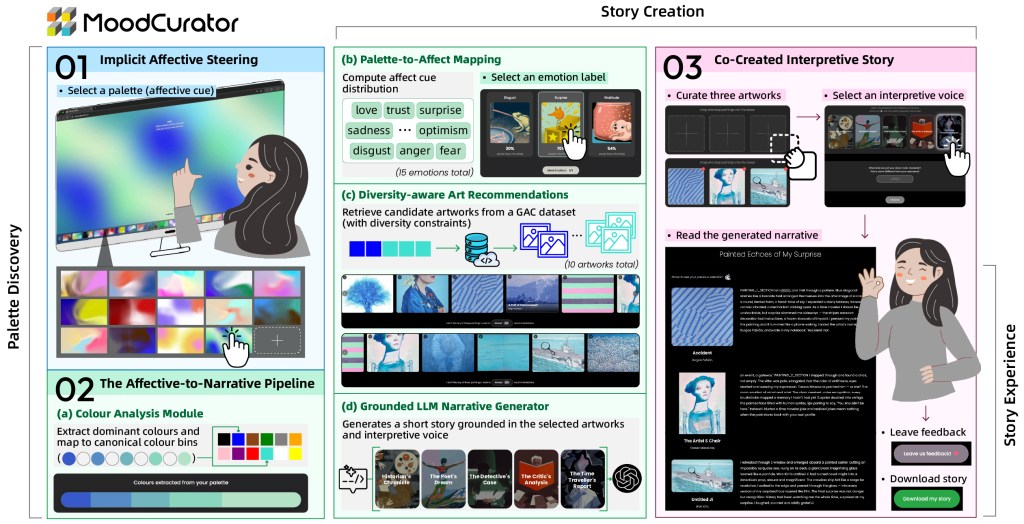
Colour is not treated as a way to detect a person’s “true” emotion. Instead, it functions as a flexible and culturally situated cue that audiences can accept, reject or redirect. Behind the interface, MoodCurator combines colour analysis, a palette-to-affect model, diversity-aware artwork retrieval and structured LLM prompting. Artwork selection grounds the story in specific visual material, while interpretive voice makes the narrative stance more explicit.
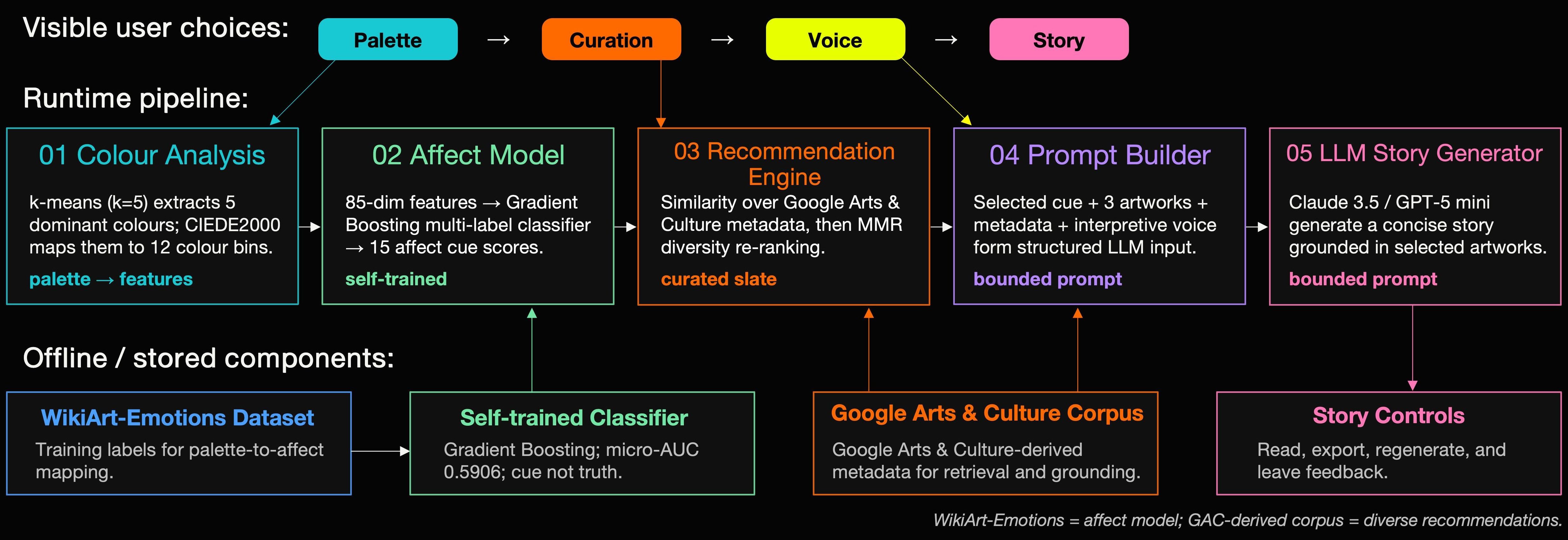
MoodCurator was developed iteratively through an in-person pilot study and an expert co-design workshop. These studies led to more legible palette interactions, perceptually aligned colour mapping, more diverse artwork recommendations and tighter narrative grounding.
A remote evaluation with 64 participants then examined usability, perceived agency and narrative engagement. Mean ratings were 4.31/5 for usability, 4.15/5 for agency and personalisation, and 4.08/5 for narrative quality and engagement.
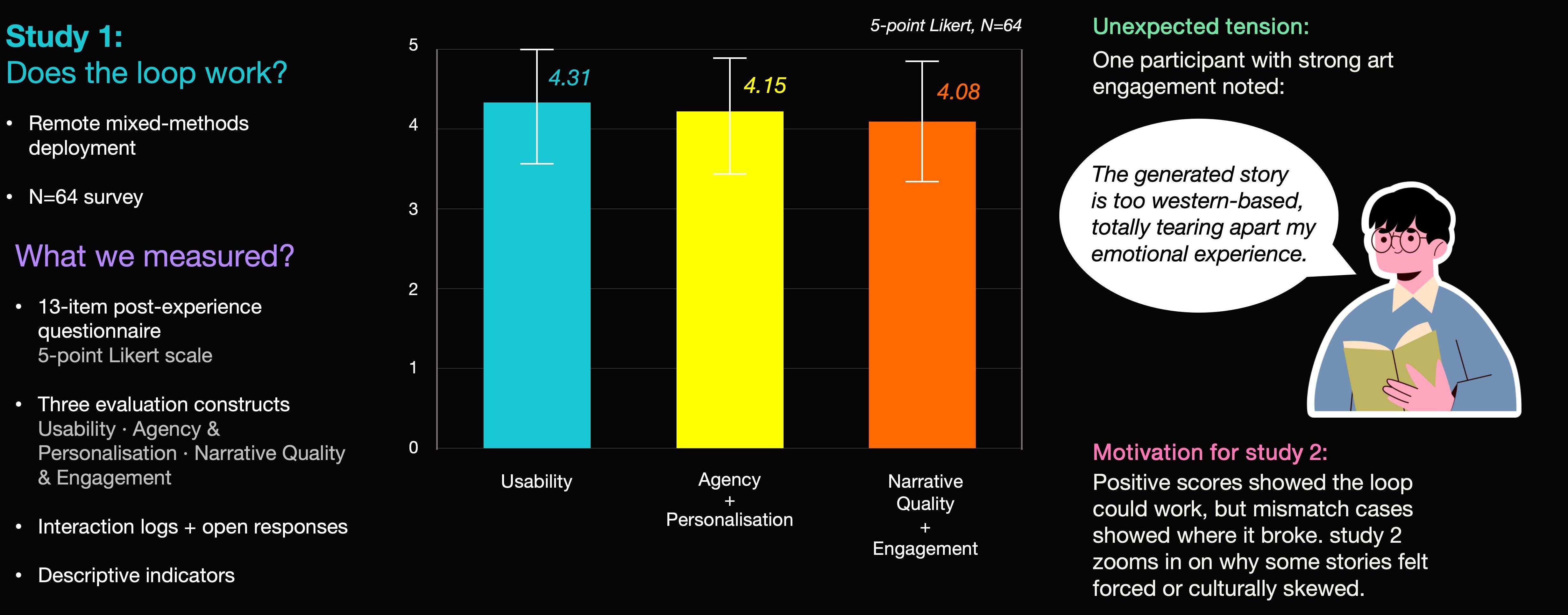
The evaluation also exposed an important limitation. Some narratives remained culturally or interpretively mismatched even when the artwork set was diverse. A follow-up think-aloud study with 10 participants found recurring cases where the system defaulted to Western, conflict-driven story structures or reduced shared cultural meanings to individual emotional narratives.
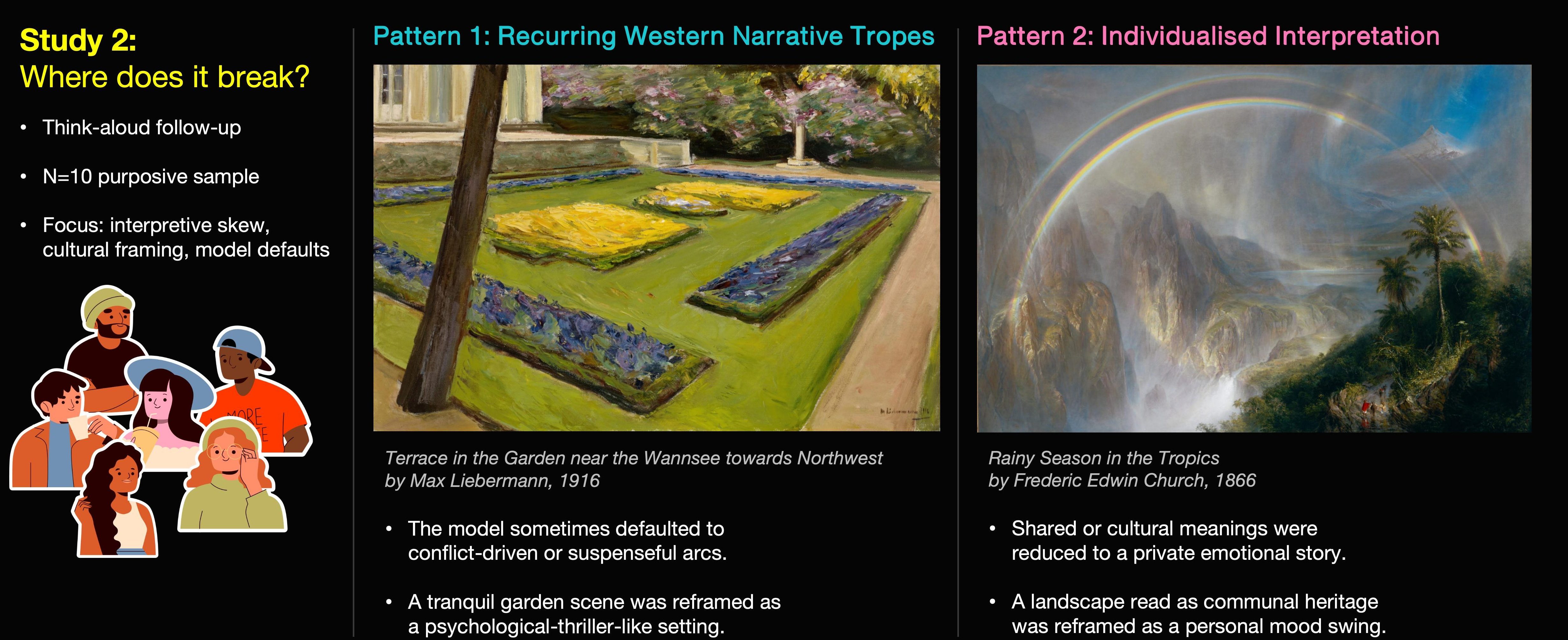
These findings shifted the project from asking only how AI interpretation can be personalised to asking how its framing can be made visible and contestable. MoodCurator treats steering as an interface design problem rather than a prompt-writing problem: affective tone, visual grounding and interpretive stance become visible points of control. The project argues that generative cultural systems should expose their interpretive assumptions and give audiences clearer ways to question, revise and redirect them.
 Marci Chi Ma